
Your money.
Your future.
Elevated.
Big futures start with small steps. ELEV8 is a practical system to help teens build confidence with money—and a life with purpose.
- Learn Skills.
- Build Strategy.
- Make Smart Decisions.
- Build the Life You Want.

One step at a time.
A lifetime of possibility.
Money confidence is built through practice. Follow a path from intentional thinking to lasting impact, with real actions you can take along the way.
Think
Shape your future
- Build the right mindset
- Make intentional decisions
- Think long term
You will:
- Make smarter choices
- Develop confidence
- Take ownership
Earn
Create value
- Learn how money is earned
- Create opportunities
- Increase your value
You will:
- Understand income
- Create value
- Develop work skills
Save
Pay yourself first
- Save with purpose
- Set clear savings goals
- Build healthy habits
You will:
- Balance needs and wants
- Build an emergency fund
- Create a savings plan
Protect
Avoid setbacks
- Build safeguards
- Avoid costly mistakes
- Understand risk
You will:
- Create emergency plans
- Avoid scams
- Protect your future
Grow
Make your money work
- Understand investing
- Learn compound growth
- Build wealth
You will:
- Grow assets
- Increase opportunities
- Build freedom
Legacy
Build something that lasts
- Build assets and ownership
- Give back with purpose
- Create a lasting impact
You will:
- Strengthen your foundation
- Help others
- Leave a legacy
The ELEV8 framework is taking shape. These steps reflect the current workbook draft.
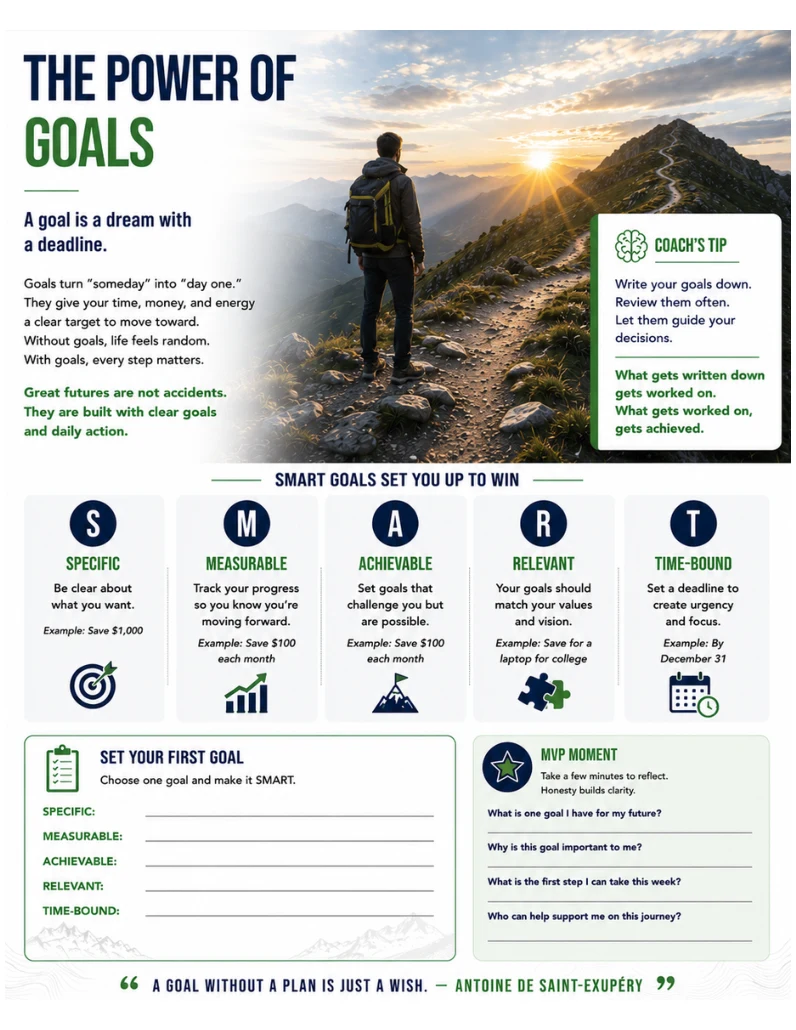 A LOOK INSIDE · DRAFT WORKBOOK
Don’t just read it.
Put it into play.
A playbook works when you use it. ELEV8 connects ideas to everyday decisions through exercises, challenges, and reflection.
- 01
Learn the idea
Make sense of a money concept, one lesson at a time.
- 02
Make your move
Apply it to your goals, your habits, and your real life.
- 03
Reflect. Adjust. Keep climbing.
Track your progress and choose your next step.
For teens finding their path.
And the people cheering them on.
Make your future your own.
Explore what matters to you and build practical habits around earning, saving, and making thoughtful choices.
Start a better money conversation.
Use the lessons as a starting point for real conversations about responsibility, opportunity, and purpose.
Most Common Teen
Money Questions
You do not need to have it all figured out. Start with one question, learn the basics, and put what you learn into practice.
How can I make money as a teenager?
Start by finding a problem you can solve or a service someone needs—yard work, babysitting, tutoring, pet care, or a part-time job. Show up on time, do what you say you will do, and do it well; your reputation can lead to your next opportunity.
How much money should I save?
Pay yourself first by setting aside a portion of every dollar you receive before you start spending. Pick a percentage you can stick with—even 10% is a starting point—and increase it when you can; the habit matters more than the amount when you are getting started.
How do I make a budget when I don’t earn much?
A budget is simply a plan for the money you actually have, whether that is $20 or $200. Cover your needs, set something aside for a goal, and decide what you can spend for fun; if your income changes, make a new plan each time money comes in.
How do I stop spending all my money?
Give your money a purpose before it reaches your pocket: move your savings first and set a limit for everyday spending. Before an unplanned purchase, wait a day and ask whether you want the item more than the goal you are working toward—small choices add up.
What’s the difference between a debit card and a credit card?
A debit card generally spends money from your bank account; a credit card lets you borrow money that you must repay. Credit can become expensive when you carry a balance, so understand the fees and terms and, if you use a credit card, plan to pay the full statement balance by the due date.
What is a credit score and why does it matter?
A credit score helps lenders estimate how likely you are to repay borrowed money, based on your credit history. It can affect whether you qualify for a loan and what interest rate you pay, so build good habits by paying on time and keeping balances low—you do not need to carry interest-bearing debt to build credit.
Can I start investing before I’m 18?
Yes—with a parent or guardian’s help, you may be able to invest through a custodial account or an eligible teen account; the rules depend on the account and where you live. Learn what you are buying, spread your risk, and keep money you will need soon in savings, because investments can lose value.
How does compound interest work?
Compound interest means earning interest on your original savings and on interest you have already earned. At a hypothetical 5% a year, $100 becomes $105 after one year and $110.25 after two if you leave it alone; starting early gives the process more time to work.
Why is my paycheck smaller than what I should have earned?
Your hourly rate multiplied by your hours is your gross pay; your take-home pay is what remains after taxes and any other deductions. Check your pay stub for hours, rate, tax withholding, and deductions, and ask your employer about anything that does not add up—being a student does not automatically make your earnings tax-free.
How can I avoid money scams?
Slow down when someone promises easy money, pressures you to act immediately, or asks for passwords, verification codes, or payment to claim a prize. Verify the person or business through a source you find yourself and talk with a trusted adult before sending money or personal information; a good opportunity can stand up to a few questions.
Is college always the best route?
College can be a great investment when it fits your goals and the career you want, but it is one of several paths. Compare the full cost, likely earnings, and job requirements with options such as community college, trade school, apprenticeships, or work experience—the goal is to build useful skills and opportunity with a plan you can afford.
Should I take out a loan for a car, school, or something else?
Before borrowing, ask what the loan helps you accomplish and whether you can afford the full cost, including interest, fees, and ongoing expenses. Compare alternatives and realistic future income, and understand the repayment terms; being approved for a loan does not mean it fits your budget or your goals.
Keep learning: Saving & compound interest · Debit & credit cards · Credit scores · Investing before 18 · Paychecks & taxes · Avoiding scams
A playbook for
what comes next.
Explore the full workbook and upcoming chapter downloads.